Cypress Lake
A Place to Pause
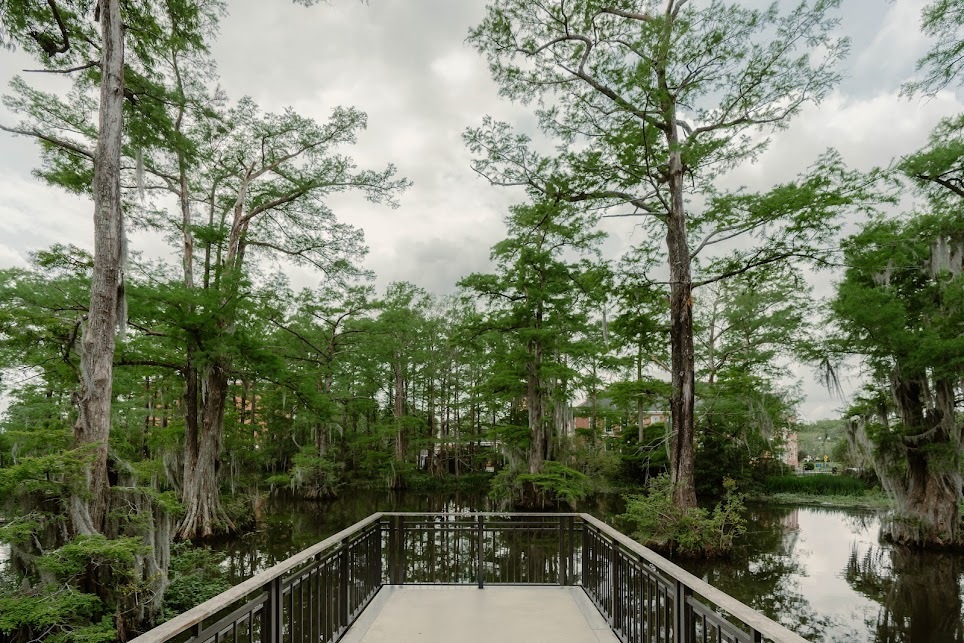
At the heart of the University of Louisiana at Lafayette lies one of the most unexpected features of any college campus: a genuine, living swamp. Framed by ancient trees, draped in Spanish moss, and home to alligators, turtles, and migratory birds, Cypress Lake feels less like a landscape feature and more like a living museum of Louisiana’s ecology and culture.
From Borrow Pit to Icon
Cypress Lake wasn’t always this picturesque. In the early 1900s, it was a borrow pit; dug out to supply dirt for construction elsewhere on campus. But by the 1920s, it was transformed into a water feature and planted with bald cypress trees, native to the state’s wetlands. Over the next century, it evolved from practical pit to campus centerpiece.
Today, the lake is more than a scenic spot; it’s a symbol of Louisiana’s ability to embrace and adapt to its natural environment rather than work against it.
Wildlife, Legends, and the Unexpected
Cypress Lake is famously home to alligators, and yes, they live there year-round. They're part of the lake's ecosystem, coexisting with turtles, egrets, herons, and fish. Their presence isn’t a novelty; it’s a nod to the region’s swampland heritage, right in the middle of a bustling university campus.
There are also legends. Over the years, students have passed down ghost stories tied to the lake, including whispered tales of hauntings on foggy nights. While no one’s confirmed the supernatural, the atmosphere, especially at dusk, fuels the imagination.
Spring Blooms and Native Beauty
One of the most striking seasonal features of Cypress Lake is the explosion of Louisiana irises that bloom each spring. These native plants, particularly the deep purple Iris giganticaerulea are a visual reminder of the biodiversity tucked into this small patch of campus. Their presence isn’t just decorative; it reinforces the lake’s role as a natural habitat and educational resource.
Despite its wild residents, Cypress Lake is a peaceful spot. Students study here, faculty eat lunch nearby, and visitors often pause, surprised to find such a space in the middle of a city. It’s part swamp, part sanctuary, and completely Louisiana.