A History of the State House in Concord, NH
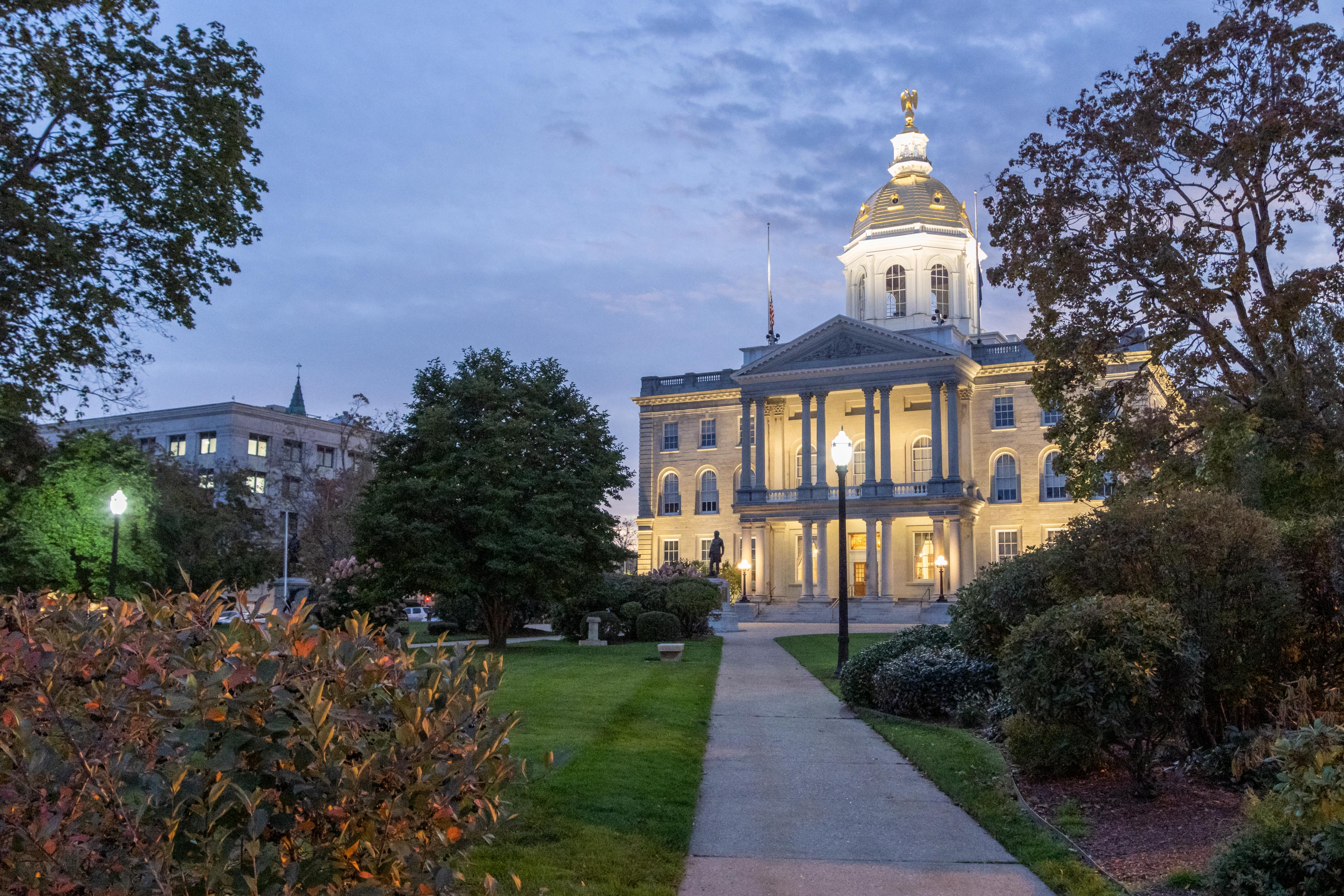
The first discussions regarding the erection of a suitable state capitol building in New Hampshire took place in the year 1814. It was indeed a memorable year. The War of 1812 had come to a close with the signing of the Treaty of Ghent, although the news had not reached America until after our troops under General Jackson had continued fighting into 1815 and won the famous battle of New Orleans.
The contest was between Concord, Hopkinton, and Salisbury, the last named town having offered seven thousand dollars for the honor. In the end, Concord won, and by 1816 final action had been taken to build there.
The considerable expense was saved by the town of Concord by the decision to build the Capitol of granite from what are now the Swenson quarries at the north end of the town and to have the cutting and shaping and facing of the stones done by the inmates of the prison.
A feature of the new and imposing building thus provided was its huge gold-painted wooden eagle, which was raised to the top of the dome in 1818. Appropriate ceremonies presided over by Governor Plumer were marked by a series of toasts, one of which was, "The American Eagle. May the shadow of his wings protect every acre of our united continent and the lightning of his eye flash terror and defeat through the ranks of our enemies."
The new building's actual cost was only approximately $82,000, but it provided adequate quarters for the legislature and committees, the Governor and Council, the Secretary of State, the Treasurer, and the library. Stuart J. Park, the builder, goes down in history as having done an admirable job, and he has Concord Street to the north of the building, Park Street, named in his honor. The first session of the legislature to be held in the new building was in 1819.
Revised from State of New Hampshire Manual for the General Court 1977, pp.115-124.