Before the Boulevard
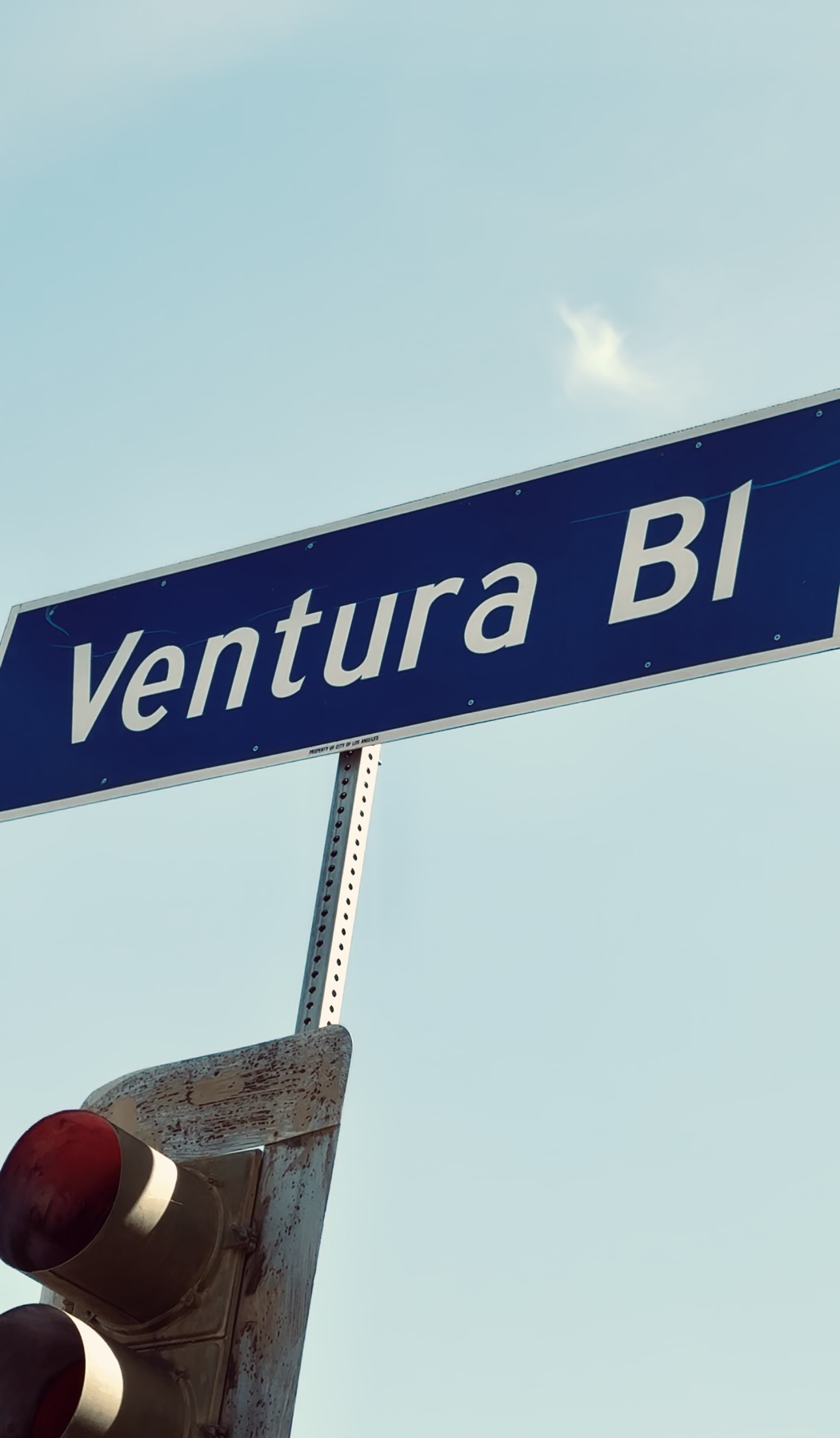
Ventura Blvd.
Before the Boulevard
Long before it became part of Los Angeles, the San Fernando Valley was home to Indigenous peoples, including the Tongva and Tataviam, whose communities were established here for generations. They lived along rivers and seasonal streams, relying on the area's oak woodlands, native plants and wildlife while maintaining trade and cultural connections throughout Southern California.
That way of life was dramatically disrupted by Spanish colonization. In 1797, Mission San Fernando Rey de España was established, becoming the 17th of California's 21 Spanish missions. Agriculture and ranching expanded around the mission, while Indigenous people were displaced, subjected to forced labor and exposed to diseases that devastated native populations.
After Mexico gained independence from Spain in 1821, the missions were eventually secularized and their enormous landholdings divided. Much of the surrounding area became Rancho Ex-Mission San Fernando, and the landscape remained largely open country dominated by ranching and agriculture.
By the late 1800s, some names that are now part of everyday life were already shaping the area. Isaac Lankershim and his future son-in-law, Isaac Newton Van Nuys, were involved in vast wheat and barley farming operations. Today, their names are attached to streets and communities traveled by thousands of people every day.
Agriculture continued to define the region into the early 20th century, with orchards, walnut groves, peach trees and farms covering land now occupied by homes and businesses.
Then came water.
The Los Angeles Aqueduct was completed in 1913, carrying water hundreds of miles from the Owens Valley to Los Angeles and dramatically increasing the development potential of the San Fernando Valley. Two years later, most of the Valley was annexed by the City of Los Angeles, tying its future directly to the rapidly growing city.
Development accelerated. Streets crossed former farmland, homes appeared and communities including Van Nuys, Encino, Sherman Oaks and Reseda began developing identities of their own.
At the same time, Hollywood was moving in. The open spaces on the other side of the hills offered room for studios, ranches and backlots. Studio City took its name from the studio built there in the 1920s, and the area's connection to the entertainment industry only grew from there.
Some of that history happened in unexpected places. During World War II, a young Norma Jeane Dougherty worked at the Radioplane munitions factory in Van Nuys. A photographer documenting women contributing to the war effort took her picture there. Those photographs helped launch a modeling career, and Norma Jeane eventually became known around the world as Marilyn Monroe.
A little more than a decade later, Pacoima teenager Ritchie Valens became one of early rock 'n' roll's most influential young stars. His career lasted only months before his death at age 17, but songs including "La Bamba" made him a lasting figure in American music.
Then, in 1969, Devonshire Downs in Northridge hosted Newport '69, a massive three-day music festival that attracted an estimated 200,000 people. Jimi Hendrix, Marvin Gaye and Creedence Clearwater Revival were among the performers.
Meanwhile, an even larger transformation was taking place neighborhood by neighborhood.
After World War II, Southern California's population exploded and the San Fernando Valley became one of the centers of America's suburban boom. Farms and orchards gave way to residential tracts. Single-family homes appeared by the thousands, offering families a house, a yard and room to spread out while remaining within Los Angeles.
Freeways expanded, cars became central to daily life, shopping centers followed new housing developments, and the suburban landscape familiar today quickly emerged.
Through it all, Ventura Boulevard became the defining thread connecting communities along the southern edge of the Valley. Restaurants, shops, theaters and neighborhood businesses transformed it from a transportation route into a destination.
Some became institutions. Casa Vega opened in Sherman Oaks in 1956 and remains a familiar landmark today. The Sportsmen's Lodge in Studio City became a legendary gathering place whose guests included Humphrey Bogart, Lauren Bacall and Clark Gable.
Hollywood's presence wasn't limited to studios and celebrity hangouts. Some of the area's seemingly ordinary homes and neighborhoods became recognizable pieces of movie and television history. Local locations have appeared in The Karate Kid, Encino Man, Pulp Fiction, La Bamba, Boogie Nights and Once Upon a Time in Hollywood. Perhaps none is more recognizable than the Studio City home used for exterior shots of The Brady Bunch, which became one of television's most famous suburban houses.
As the decades passed, the communities along the boulevard developed distinct personalities. Studio City retained its connection to entertainment. Sherman Oaks grew around the intersection of residential neighborhoods and commercial energy. Encino became known for its tree-lined streets and larger properties. Tarzana, named for the fictional character created by author and former local landowner Edgar Rice Burroughs, grew from ranch land into a thriving residential community. Farther west, Woodland Hills developed into a major residential and business center.
Despite being part of Los Angeles, the San Fernando Valley developed such a strong identity that residents once seriously considered leaving the city altogether. In 2002, voters considered a proposal that would have allowed the Valley to separate from Los Angeles and become an independent city. The measure ultimately failed citywide, but its presence on the ballot spoke to the independent identity that had developed on the other side of the hills.
Today, traces of all these eras remain.
They are in names like Van Nuys and Lankershim. In the mission that has stood since the 18th century. In neighborhoods built over former orchards, restaurants that have welcomed generations of families and studios that helped turn Southern California into the entertainment capital of the world.
The San Fernando Valley has transformed again and again, from Indigenous homeland to mission land, from ranchos to farmland, and from orchards to subdivisions.
For someone who has just arrived, knowing a little of that history changes the way you see the place. The street you take to work has a story. The neighborhood you just moved into may have looked completely different within the lifetime of someone still living here.
Long before the freeways, restaurants, neighborhoods and traffic, there was another landscape here.
And once you know what came before the boulevards, you start seeing what surrounds you a little differently.