Step Back in Time at the York County History Center
Amid Pennsylvania’s picturesque Dutch Country along the Susquehanna River, York County can claim abundant natural beauty and rich history. From idyllic hiking trails, including the Mason Dixon Trail, to historic railways, the majestic Central Market, and the centuries-old York State Fair, York has served as a unique destination for generations.
Explore the area’s storied past through the York County History Center’s Museum, library, and archives - a gateway into 300 years of American history.
Located in the heart of historic downtown York City, this interactive museum is housed in a beautifully renovated building that once served as a steam-generating plant in the late 19th century. The transformation into a state-of-the-art museum provides a seamless blend of historical architecture and modern technology that brings the past to life.
From its Revolutionary War roots, where York served as a temporary capital of the United States, to its significant industrial achievements, the York County History Center offers a comprehensive look at the events and people that have shaped York County and the nation. Take in everything from the restored Conestoga wagon and Revolutionary War-era documents to the agricultural and manufacturing history that has defined York County.
Peek into the past with interactive touchscreens that display more than 1,000 photographs and nine hands-on activities that delve into the backstories of important historical artifacts. That deep dive starts when you enter the first-floor exhibit space and see the History Makers Tower. The tower is an array of screens featuring figures that in one way or another contributed to York County’s story.
The museum integrates this 21st century display with the building’s smokestack, making the building itself an artifact in the exhibit. The stack dates back more than 100 years and was part of a complex of buildings that produced electricity in York for generations.
As you make your way around two floors of the exhibit, witness some of the most iconic York County artifacts: the massive A-frame ammonia compressor, a piece of industrial refrigeration equipment made around 1915 by the York Manufacturing Company; an original printer’s copy from 1777 of the Articles of Confederation, which served to organize the young colonies into a new nation during the Revolution; a Pullman Opera Car, made by a York carmaker in the early days of automobiles.
Elsewhere, the new library and archives offer opportunities for visitors to research genealogy, family history, local lore, and military history. The History Center’s library resources are nationally known and considered among the best in all of Pennsylvania.
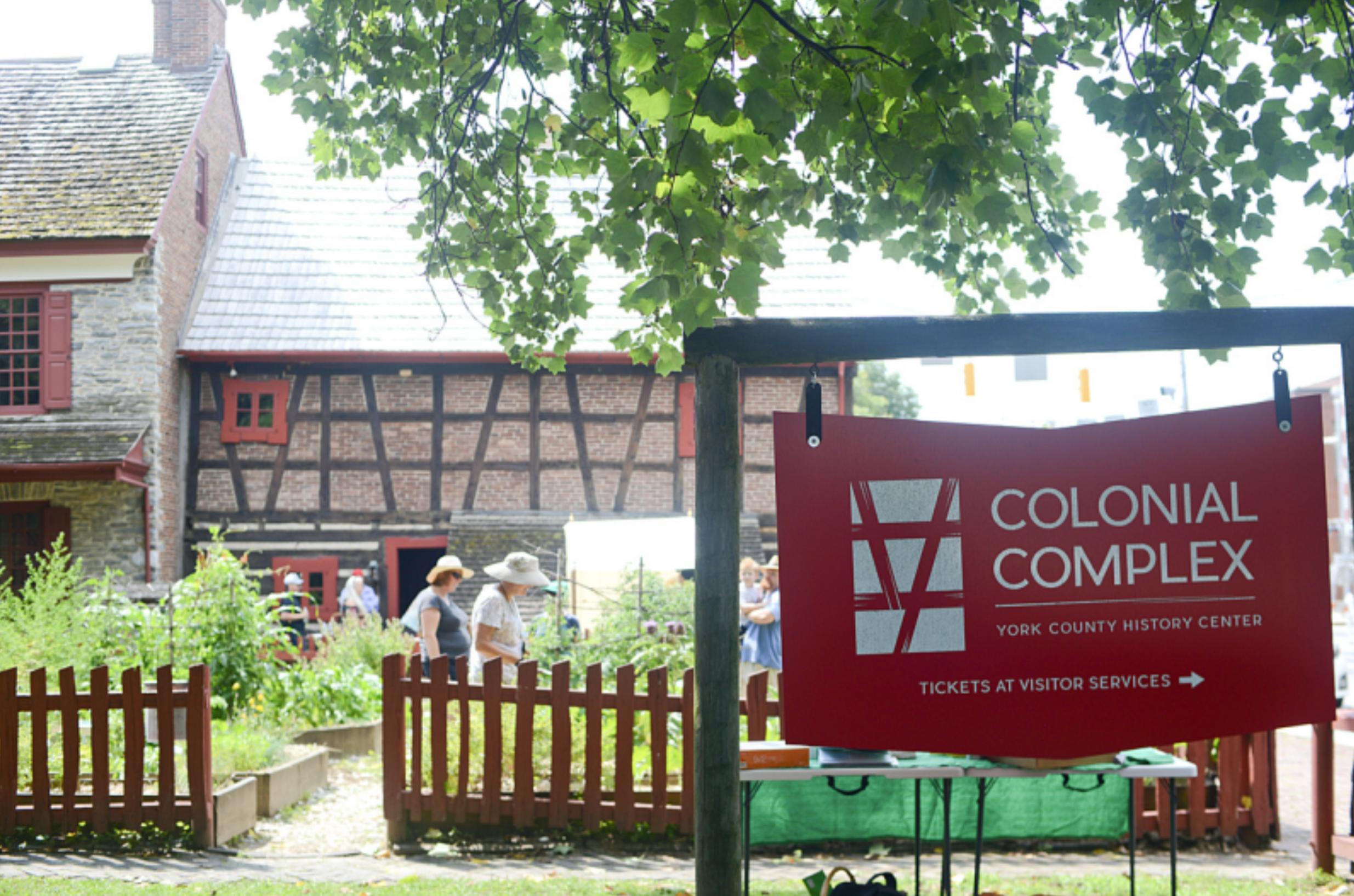
Just a block away from the museum, take a guided tour of the Colonial Complex, a cluster of Colonial-era buildings with origins dating back to the 1700s. You’ll see the General Horatio Gates House, Golden Plough Tavern, Barnett Bobb Log Cabin, and a reproduction of the original York County Court House, where the Continental Congress met during the Revolutionary War and drafted the Articles of Confederation.
The History Center also operates the Agricultural and Industrial Museum, two blocks south of the Colonial Complex on West Princess Street, and the York County Fire Museum, on the west end of the city near Market Street and Carlisle Avenue.
The History Center is a wonderful starting point to explore more history around York County:
- To the west, Hanover offers a walking tour of its downtown that highlights the important connections the area has to the Battle of Gettysburg.
- To the east, visit the Susquehanna National Heritage Area and discover the Susquehanna River’s role in shaping the area’s history.
- To the north, local historical organizations such as the NeyChip History Center in York Haven and the Northern York County Historical and Preservation Society in Dillsburg keep the stories of those communities alive.
- Southern York County is rich with history, from the Black families that settled in New Park and Fawn Grove to the railroad lines that passed through New Freedom and Muddy Creek.
Dan Fink is vice president of marketing and public relations for the York County History Center.