A Brief History of Sarasota
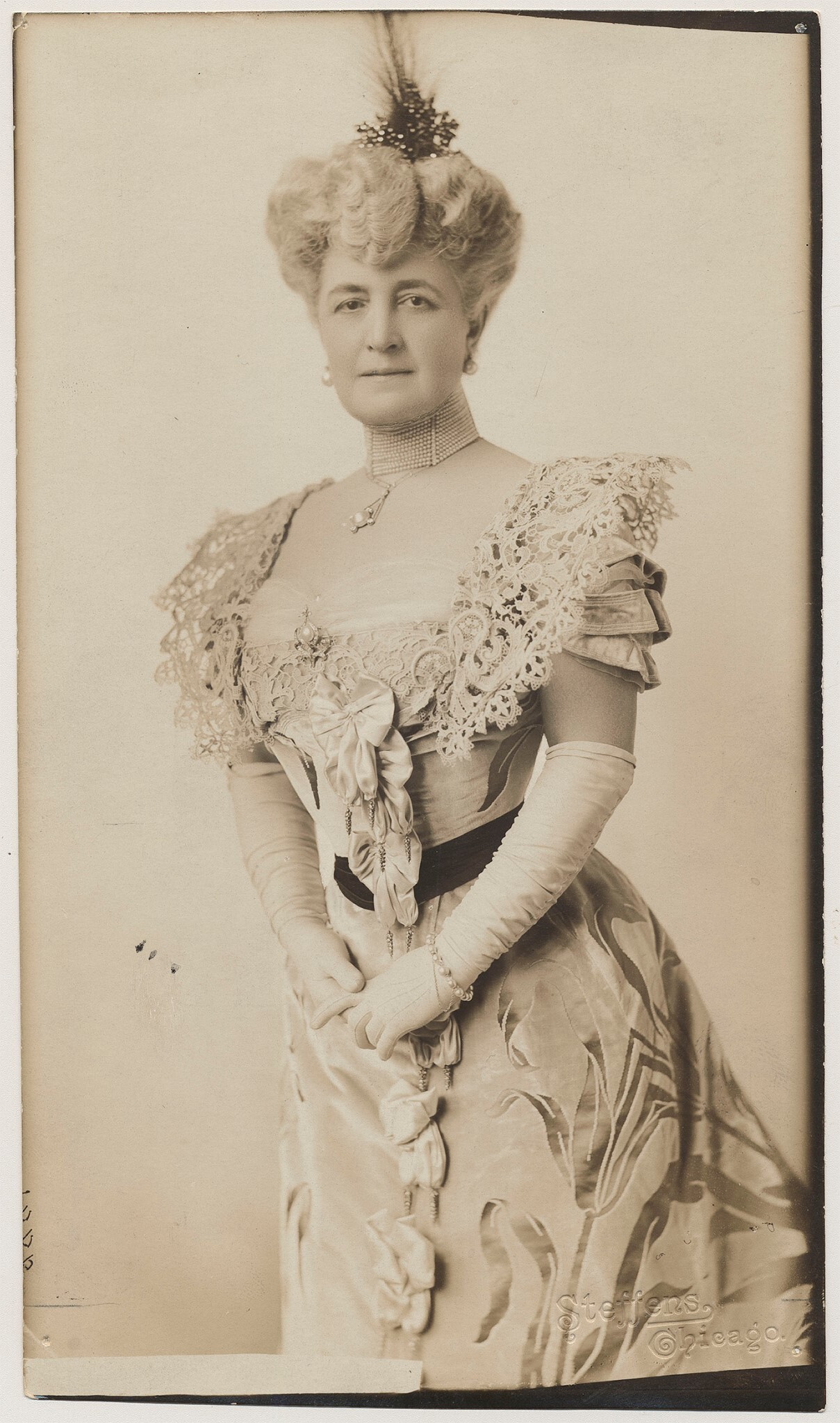
Bertha Palmer
The history of Sarasota is as rich and varied as the many disparate neighborhoods which comprise this – relatively small – city by the bay. This is merely a snapshot.
In the late 1800s, Sarasota was a quaint fishing village that had only recently begun to attract developers and investors such John Hamilton Gillespie, who began to develop Sarasota according to plan for a failed Scots colony. He was sworn in as mayor, and Sarasota was incorporated as a town in October of 1902. For a taste of this early incarnation of Sarasota, one can take a ride up to Historic Cortez Village, which is one of the last remaining fishing villages on the Southwest Gulf Coast.
Bertha was a celebrated businesswoman and philanthropist known for her exceptional taste, and when she arrived in the sleepy fishing village that was Sarasota in 1910, she saw nothing but potential. She had spent most of her life as one of the most famous women in Chicago society accumulating wealth and dripping with jewels and furs while she traveled the world with her husband, wealthy land developer, Potter Palmer. Bertha was not a frivolous woman, she cared deeply about the arts and about furthering women’s causes, as well as acquiring and developing land. When Bertha’s husband died in 1902, she initially moved to London and entertained, but when she found herself in Sarasota in her 60s, she decided to put down some roots. Bertha built herself a lavish estate and named the neighborhood “The Oaks,” which remains a very wealthy neighborhood. Her estate is what is now known as Historic Spanish Point, a very popular destination for locals and visitors alike. Bertha also became a rancher, she had 15,000 acres in the Myakka River area, which she called Meadow Sweet Pastures and where she became an innovative and impressive rancher and farmer. Bertha’s friends and contemporaries followed her lead and began to build winter homes in Sarasota. She died only eight years after moving to Sarasota, but she left an indelible mark on the city.
It was only one year before Bertha arrived that Sarasota began to welcome what would later become our most celebrated residents, John and Mable Ringling. At first, they were snowbirds – coming to visit only in winter. Then John decided to build himself a palace. This 30-room mansion was designed by an architect out of New York, Dwight James Baum, and then built by developer and one-time business partner to John Ringling, Owen Burns. There are quite a few Sarasota landmarks designed by Dwight James Baum, including the Sarasota Times Building (1925) and the Sarasota County Courthouse (1926), but certainly the most beautiful was John Ringling’s Venetian Gothic Mansion “Ca d’Zan.” Ca d’ Zan (which means “House of John") is still a stunningly beautiful part of the Sarasota zeitgeist and can be toured as part of a visit to the Ringling Museum.
John Ringling also changed the cultural face of Sarasota when he moved the circus to town in December of 1927. Their first performance was on December 25, 1927. The legacy of the circus is felt throughout Sarasota, many of the circus families are still represented and the Sailor Circus Academy is America’s oldest youth circus. You’ll probably hear someone say it sooner or later, so here it is: “This is a drinking town, with a circus problem.”
There was certainly something in the water in Sarasota in 1909/1910 – and it wasn’t just all those fish. In 1909, another couple began visiting the tiny town of Sarasota, population 800: William and Marie Selby. They didn’t become permanent residents until 1921 when they purchased property on Sarasota Bay. Marie Selby was an equestrian, a pianist, and a passionate gardener. Her husband, William, was an oil man. Marie and Bill were far less ostentatious than their peers, as evidenced by their modest home, which is known presently as the Selby House Café. They had no children of their own, so they focused their philanthropy on providing scholarships to local children to receive higher educations. They were also contributors to the New College Fund Drive and to the building of the Van Wezel Performing Arts Hall. When her husband died in 1956, Marie Selby began managing the family trust “The William G. and Marie Selby Foundation.” When she died in 1971, she willed their property to the people of Sarasota, and, as a result, we are all able to enjoy the fruits of her labors in the form of the Marie Selby Botanical Gardens.
Another important aspect of the history and development of Sarasota involves a couple of popular sports: golf and baseball. John Hamilton Gillespie was an avid golfer, and when he moved here from Scotland, he immediately plotted golf holes in the area that is now Main Street in Downtown Sarasota. There’s even speculation that this course (laid out in 1886) could well have been the first golf course in America. Since that time, Sarasota has hosted myriad famous golfers, such as Arnold Palmer, on a variety of courses designed by prestigious golf greats from Donald Ross to Gary Player.
The history of baseball in Sarasota begins at Payne Park because beginning in the 1920s with the arrival of the New York Giants (thanks in part to John Ringling), Payne Park became a baseball destination. The Red Sox, the Dodgers, the Indians, and the White Sox all played on that baseball diamond. In 1989, The Ed Smith Stadium was built on 12th Street to house Major League Baseball for Sarasota. The three teams that have called that location home have been the Chicago White Sox, the Cincinnati Reds, and current residents the Baltimore Orioles.
To truly understand and explore the history of a city like Sarasota, you can go as far back as the various Native American tribes that first called this area home, or you can jump ahead to the Cuban fishermen of the late 1800s, you can study the boomtown that was Sarasota in the time from 1909 to 1927, or you can look up the fight that ensued in 2000 when the John Ringling Causeway was proposed to replace an old-fashioned and malfunctioning drawbridge. In this article, we have only scratched the surface of a layered and fascinating story.
Sarasota was developed by innovators and artists, ranchers and bankers, REALTORS® and athletes, and Sarasota continues to attract accomplished men and women with vision and talent today. There’s an adage that comes up again and again when locals get off work and head to the white sand beaches of Siesta or spend the day shopping in famed St. Armands Circle: “We live where you vacation.” Sarasota is the kind of place where people come on vacation and then never leave. That’s what happened to Bertha Palmer, and John Ringling, and Marie Selby, and that’s what happened to me – but that’s a story for another day.